The joys and sorrows of writing a book

Writing

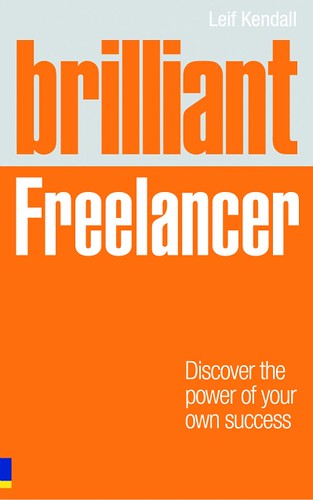
I’ve been busy. Really busy. Busier than a bee on crack. In between a packed schedule of web copywriting jobs I’ve been writing a book on freelancing. Here’s what I’ve learnt about writing books:

1. Books take longer to write than you think. I thought it would take a couple of weeks, but I hadn’t factored in the time required for research and interviews.

2. Books are fairly easy to write if you have a cast-iron deadline. I’m staring down the barrel of my publisher’s deadline. I dare not disappoint them.

3. Books require planning. The spreadsheet has been my friend. With everything planned from the very beginning, I’ve been able to pace the production. The spreadsheet doesn’t write the book, but it does give you a blueprint.

4. Books demand a long, steady effort. You can’t just vomit up a book. They take time. And a persistent effort. It’s not always easy to keep a book chugging along, especially when you hit the sections that don’t ignite your passions.

5. The last long lap is the hardest. Nearly there!

So there aren’t really any sorrows – not with this book at least. Not yet.

Better business cards?

Beansniss cards

One of my co-werkers here at The Werks, web designer Jay Alvarez, recently launched her new web agency: Root Interactive.

The new website is delightfully different, with the pages leading off down a series of bean stalks (you must try it yourself), but the most delicious detail of her brand is the unusual approach she took for business cards – or beansniss cards (sorry) – which she printed on butter beans.

One of her business cards is currently growing in our office.

The visible copywriter

Leif Kendall

Thanks to Adam Bronkhorst, one of Brighton’s finest freelance photographers, I’m no longer invisible. You can now see what I look like here and on my About page.

Adam is a fantastic photographer and a really likeable guy and I highly recommend him. He’s also available as a wedding photographer.

In defence of web industry specialisms…

Specialists In Fresh Cream Eggless Cakes

The web is a big, messy thing. It’s complicated. There are many facets to the web, involving technologies, crafts and skills. Hardly surprising then that to make something wonderful on the web, you may need the help of specialists. You wouldn’t expect to build a house without the help of specialists, and you certainly wouldn’t expect an architect to carry a hod, or a roofer to plumb the toilets, or the builder to plan the wiring.

The need for web industry specialists seems obvious to me, but there is scepticism about some of the professionals helping to make better web experiences that work for both users and the organisations behind them. Let’s look at some of the sceptical remarks that have surfaced recently:

The sceptics view of web industry specialists…

…urm, actually, it’s impossible to quote the rambles of Olivier Blanchard, but you can gauge his ire by scanning his inflammatory but ultimately hollow blog post in which he rails against the current trend for content strategy.

And Ryan Carson tweeted his scepticism for user-experience designers:

But why should web designers stop at UX expertise? Surely they should also take on copywriting, usability testing, market research and cross-stitch too.

I’ve worked on web projects with dedicated UX people and seen those UX people carry out a range of functions that are quite different from web design – things like research, user tests and creating personas – things that warrant a specialist. Sure, a good web designer should take an interest in related fields like user experience design, information architecture and usability, but to expect every individual to become experts in so many broad areas is somewhat delusional. Should we all be the Jack of all trades, and master of none?

Content strategy – not snake oil

As more people talk about content strategy, there will be doubters. To some, content strategy is just a faddish name for things we’ve always been doing. And yes, while content strategy doesn’t bring many revelations to the web, it does package up a way of thinking about the challenges of web content. Content strategy isn’t about creating jobs or complicating web projects – it’s about bringing clarity to the often murky world of content, and helping businesses derive value from their content.

Content strategy isn’t for lone bloggers, just as you don’t need an architect to erect your shed. But content strategy does make sense when you’re wrangling hundreds or thousands of pages of content and a raft of business goals.

In closing…

I love the idea of simplifying the web. If the creation of great websites could be simplified, reduced to a formula, or a series of strokes on a keypad that unfurled a mesmerising website that met every objective and satisfied every faction of its audience – I’d be thrilled. But the reality is that building big and complicated web entities requires the skills of specialists.

Calling BS on BS calling

Call: BS

There’s a trend for media types to “call BS” on something in the industry. The act of calling BS is a way of saying “I hereby declare that this thing, which so many people believe in so fervently, is in fact bullshit.” It’s lots of fun, and the proclaimer gets people talking and linking to their stuff, some people get a bit cross and leave furious comments on blog posts. Then it all dies down and everyone continues as before.

But I would like to hereby declare that the act of “calling BS” is in itself total bullshit. People have called BS on social media gurus, UX people and SEO, but what does this really mean? It just means that someone doesn’t like something. But even in the case of ‘social media gurus’  – the most derided of all web professionals – a demand remains for their services. Otherwise they wouldn’t exist. Calling BS is really just the expression of an individual opinion. Often the contentious opinion is shared by half, and resented by half.

BS calling is jolly good fun, and gives us a chance to rally behind our chosen positions and throw rotten vegetables from the comfort of the comments box, but it’s totally pointless, and can reasonably be deemed BS. In fact, this entire post is BS.

A copywriter in London (at TechHub)

TechHub Coworking Space, London, England

Living in Brighton has been instrumental to my success as a freelance copywriter (thanks to all the brilliant businesses and enterprising digital types), but London has always provided a good percentage of my work.

Now working in London 1-2 days per week

So it became logical to split my time between the two cities. And when I heard about TechHub, I knew there was finally a London coworking space that made sense for a web-focused copywriter like me.

If you need a freelance web copywriter in London, you can find me at TechHub (a stone’s throw from Old Street tube) at least one day each week.

Assess your website with a free web marketing checklist

Assess your website with a free web marketing checklist

Websites are a complex challenge for many businesses. Before you can make a website better, you have to know where it’s going wrong and what you want it to achieve.

Making sense of web marketing for small businesses

Many of my best clients are small businesses who are not “web natives” or geeks or even – God help them – on Twitter (gasp). Few business owners have the time or resources to make their website as good as it could be. A common question from SMEs is: “Where do we start?” Clients often know that their website is under-performing, or just plain broken, but the question of where to begin often gets in the way of action.

Because of this problem, I got thinking about how to reduce the complexity of web marketing. And the end result was a check list.

Print it out, sit down in front of your website and start ticking! When you’re done, you’ll have a quick view of obvious errors or missing details – things you can easily fix.

Get your free profitable website check list (151kb PDF)

The check list doesn’t cover everything, but it’s a good starting point if you know something is wrong with your website but don’t know what it is. Thanks to Emma at Door22 for her excellent document design work.

Free for you to use, change and meddle with

This document is released under a Creative Commons license, so you can use it however you like. You can even slap your own logo on it and call it yours, providing you credit me as the original author. If you’d like help customising it for your own purposes, just ask!

WriteClub London grows and grows

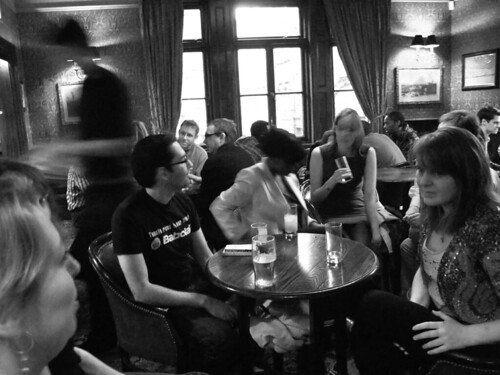
All kinds of writers – journalists, sci-fi authors, poets, creative entrepreneurs and copywriters have gathered for the past nine months to mingle, mooch, booze and schmooze. Meetings were quiet, consisting mainly of friends, acquaintances and people off Twitter. But last month something changed.

Thanks to our new meetup.com profile, created by co-host Al Robertson, our last meeting was throbbing with new members!

Since that lovely evening we’ve had more new members joining the WriteClub London Meetup group, with 20 confirmed attendees and a few more ‘maybes’.

What you can expect from WriteClub London

Many people question their own status as a writer, thinking that to come to WriteClub you need to be a professional writer, or published. But that’s nonsense. We’re a group for all kinds of writers and non-writers, so even if your writing achievements have been limited to intentions or daydreams – you’re very welcome to join us. WriteClub is a very relaxed group, and one of our goals is to create a space for people to think and talk about writing. You may find inspiration or renewed enthusiasm for writing after spending an evening with similarly-minded folk. And of course the conversations are not limited to writing – chat tends to drift off in all kinds of unexpected directions.

We meet in a pub that’s open to the public. You don’t need a ticket and there’s no cost to attend. We don’t do formal introductions or group discussions. We don’t have rules or a format. There’s no big agenda either. The group is here for you, to be whatever you want it to be. See you there!

The copywriter from Writing Magazine

I was recently interviewed by Writing Magazine – so if you’ve ended up here after seeing me there, hello!

If you’re interested in going freelance (as a copywriter or anything else), I recommend Freelance Advisor as a great place to get ideas. They have an excellent guide to starting out, called Go Freelance (I wrote it!).

Proof points: elevate your copy with a touch of reality

Evidence, II
The words you write on the web don’t carry much weight. Corporate web copy is littered with platitudes, boasts, claims and statements of ‘facts’ – all with questionable levels of truthiness. Because any company can claim to be:

  • experts
  • experienced
  • creative
  • enterprising
  • this list could go on forever

the words are weak.

Great web copy gets beyond empty words and offers something tangible.

Don’t claim to be an expert in your field. Demonstrate your experience with copy that reveals your knowledge. Get down to details – talk of things that only the initiated know about. You don’t have to bore people with your technical prowess, just give them a hint of the expert knickers under your corporate skirt.

Your web copy is not the only way to reassure visitors that you really are experienced/creative/enterprising/expert. Make liberal use of testimonials, case studies and portfolio pieces to give proof. The imagery and design of your website is crucial in this respect.

Ask yourself how you can stand out from every other business that claims to be the best – how can you show that you’re the best?